By air and sea... Military personnel explain how Egypt supports Saudi Arabia
Listen to the article. The audio text is automated, generated by an automated system
Newsfront X
·3 دقائق read
Listen to the article. The audio text is automated, generated by an automated system
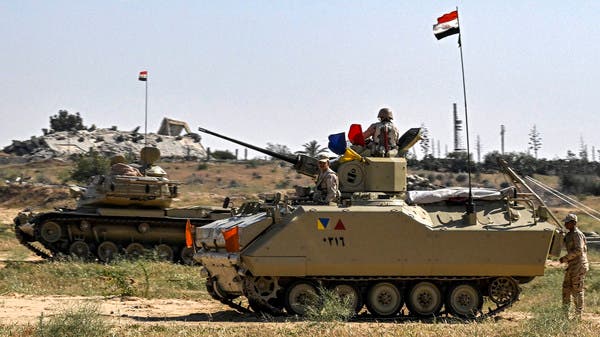
In a strategic step that reflects the depth of the security partnership between Cairo and Riyadh, and confirms the principles of protecting Arab national security, Egyptian President Abdel Fattah El-Sisi announced yesterday, Saturday, his country’s readiness to take all necessary measures to defend Saudi Arabia if it requests it, in parallel with the Egyptian Parliament’s call to hold an emergency session today to authorize Sisi to take what is necessary to intervene in defense of the Kingdom.
While this exceptional move raised fundamental questions about the nature and size of the expected Egyptian military support for Riyadh, and the boundaries between defensive insurance and offensive operations.
While Egyptian experts and military personnel revealed details of the upcoming cooperation scenarios, starting with intelligence coordination and protecting airspace and sea lanes in the Red Sea, all the way to strengthening deterrence capabilities to confront ballistic missiles and drones.
In this context, Major General Staff Dr. Muhammad Qashqoush, lecturer at the Military Academy for Postgraduate and Strategic Studies, explained that Egyptian support for Riyadh will be “purely defensive.” He indicated in statements to Al-Arabiya.net/Al-Hadath.net that if Egyptian elements participate, their tasks will focus on securing some vital places, the East-West oil pipeline, airports and economic facilities that have been targeted or attempted to target Houthi forces.
Qashqoush also added that the nature of the Houthi hostilities, which rely on ballistic missiles and drones, requires that insurance focus on confronting these threats and distributing interception missions from the southern directions, in full coordination between the two military commands after obtaining the constitutional mandate from the House of Representatives. He stressed that the Egyptian leadership's emphasis on the defensive nature of the move sends a message that Egypt is not attacking Yemen, but rather defending its brothers and strategic goals, calling on Iran and its arms to resort to the voice of reason and stop the escalation.
For his part, Major General Staff Dr. Wael Rabie, who specializes in regional and strategic affairs, believed that calling the House of Representatives to convene in anticipation of any Saudi request aims to send a “clear message of deterrence” against any attempts to threaten the Saudi depth or undermine the stability of the region.
He also pointed out that the security of the Arabian Gulf represents an integral pillar of Egyptian national security, in addition to Cairo’s adherence to preserving the sovereignty of states and rejecting the presence of weapons outside the control of the legitimate authorities.
Rabie considered that Egyptian aid might consist of elements from the air defense or air force to secure the airspace, in addition to naval units to contribute to protecting the Saudi coast.
In addition, he stressed that this support comes to enhance the high capabilities of the Saudi army, benefiting from the accumulation of experience and ongoing joint maneuvers between the armed forces of the two countries.
Brigadier General Dr. Tariq Al-Akkari, a specialist in strategic affairs and military economics, highlighted the ongoing readiness of the Egyptian Armed Forces, stressing that history has not witnessed any Egyptian delay in supporting the brothers in Saudi Arabia and the Gulf, especially in the areas of intelligence coordination and information exchange. Al-Akkari pointed to the importance of joint coordination to protect the security of navigation in the Red Sea, as Egypt and Saudi Arabia are the two main powers overlooking this vital artery and have two strong armies and stable governance systems.
It is likely that intelligence cooperation will be the cornerstone of any future military arrangements, followed by all field possibilities, including air defense and securing the air and sea space, according to what is agreed upon between the two countries.
These military movements and statements come to translate the determinants of Egyptian foreign policy that Al-Sisi announced on several occasions, as he always emphasized the saying “the track’s distance” as a symbol of the speed of the Egyptian response in protecting the brothers, considering that Gulf security is a red line and an integral part of Egyptian national security.
The Egyptian Parliament had decided to hold an emergency plenary session today, Sunday, to discuss developments in the regional situation and Egypt’s firm position towards protecting the security and stability of Saudi Arabia.
Suggested
Read also
 Politics
A Saudi prince expresses his opinion about the poetry of the Crown Prince of Dubai... and gives advice to the Saudis and Emiratis “in this critical period”
 Business
Al-Mowasat announces the filing of a commercial lawsuit against it demanding $89.43 million
 Business